The 3 Hidden Challenges of Early Adoption in Open Finance — and Why the Leap’s Still Worth It


We’ve explored which countries are embracing open finance, what the benefits are of adopting early and the business use cases for being an early adopter, but what about the challenges that may arise. In this article we look at the hidden challenges of early adoption in open finance.
Being first often means bearing the brunt of the initial technology investments and adapting to evolving standards. The lack of a clear regulatory framework can increase risk and operational complexity to adapt it in the future when the regulations are defined, if the initial implementations are not future proofed.
Working with a technology partner who specializes in the ever changing open finance regulations and standards can mitigate this risk however.
Early adopters might have fewer partners and lower transaction volumes initially. This isolation can make it more challenging to achieve the network effects that drive value in mature ecosystems. But being there early means you’re the “go to” as innovation accelerates.
As global standards evolve and local regulations eventually emerge, your technology and business models might need frequent adjustments. The regulatory frameworks and standards continue to change as the ecosystem grows and matures. This is the norm, but the early efforts can strain resources and require a robust strategy for continuous innovation.
Yes, the initial investment, ecosystem limitations, and the need for constant adaptation can seem daunting, but this is how true market leaders are made — by embracing challenges and turning them into opportunities. The risks are real, but the rewards of shaping the future, gaining a competitive edge, and reaping long-term benefits are too great to ignore.
We’re your sounding board when it comes to open finance, so get in touch and take the leap.

Canada's Consumer-Driven Banking Act received Royal Assent on March 26th. Eyal Sivan, GM for North America at Ozone API and host of the Mr. Open Banking podcast, breaks down what the legislation actually settles, where Canada sits relative to other markets, and what banks and credit unions should be doing right now.
 Eyal Sivan
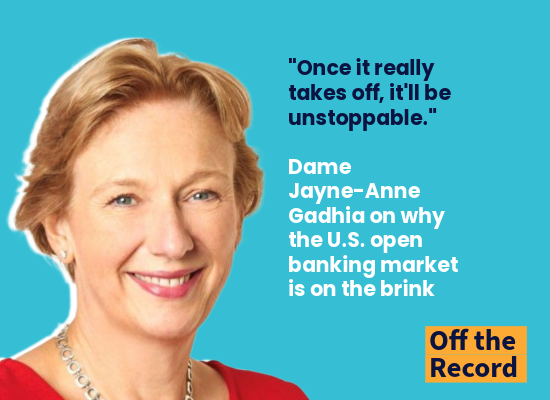
The U.S. open banking market has always moved on its own terms. But with JP Morgan now charging for API access, the commercial conversation has changed. Dame Jayne-Anne Gadhia, Ex-CEO of Virgin Money, joins Huw Davies to discuss data ownership, fairness, and why the U.S. won't stay in its holding pattern much longer.
 Shannon Bellringer

The traditional banking model is dead. Today's customers are CEOs of their own financial lives, assembling best-of-breed services through open finance. Banks face a critical choice: become a compliance-only utility and lose the customer interface, or build smart API strategies that make them indispensable components in customer-managed financial stacks.
 Fabio Caldeira