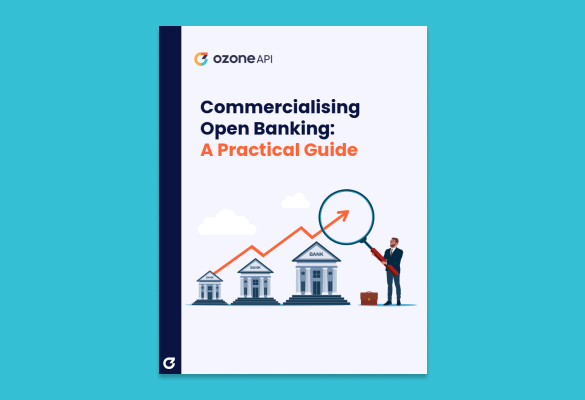
Around 60 jurisdictions have now mandated or regulated open banking. The infrastructure is being built. The standards are maturing. But most banks are still treating it as a compliance cost, not a commercial asset.
That’s the gap this guide addresses.
Banks bear real ongoing costs to deliver open banking: building and maintaining standards-compliant APIs, security certifications (ISO 27001, SOC 2 Type 2, FAPI), 24/7 third-party support, fraud prevention, and continuous updates as standards evolve. Without a clear path to revenue or strategic value, investment stays minimal and the potential stays unrealised. The third parties connecting to those APIs, meanwhile, often expect everything for free.
It doesn’t have to work that way.
The three-model framework
The guide walks through three distinct approaches to building commercial models around open banking APIs, each with practical implementation steps.
Foundational APIs are your market presence play. Basic account information APIs, mandated by regulation in most markets, deliver real strategic value even at low or no direct cost: higher customer retention, credit decisioning advantages, and your entry point into open finance ecosystems. There’s also a clear commercial path: usage tiers, rate limiting, and support packages that sit on top of the regulatory baseline without conflicting with it.
Premium APIs generate direct revenue. Payment initiation, identity and income verification, Confirmation of Payee (CoP) and Verification of Payee (VOP): these APIs have clear costs and clear value, making them natural candidates for commercial pricing. The guide covers what to charge, how to structure terms, and the specific technical and liability requirements for each.
Distribution channel APIs are where open banking becomes a genuine growth channel. Instead of customers coming to your branch or website, your products appear wherever financial needs arise: an accounting platform surfaces your SME credit line when a client’s cash flow tightens, a savings product appears in a fintech app when a user shows intent to save. Brazil is already running this model at scale (2.3 billion successful API communications a week). The UK, EU, UAE, and Saudi Arabia are all moving in the same direction.
What the guide covers
Beyond the three models, the guide addresses:
- How to assess your current state and identify quick commercial wins in the next 90 days
- How to build the internal case for the board, technology teams, product, and legal
- The technical platform requirements for each model, including a build vs. buy analysis
- Regional specifics across the UK, EU, Brazil, the U.S., Middle East, Africa, and Asia Pacific
- The metrics that actually matter, and realistic timeline expectations
- The common mistakes that slow commercialisation down or kill it entirely
This isn’t theory. It’s built on what we’ve learned helping banks, central banks, and regulators across six continents implement open banking infrastructure, starting with the UK open banking standard, which our founding team helped design.
If you’re ready to move from compliance to commerce, download the full guide below.
Get instant access
Download your guide to commercialising open banking.

 Huw Davies